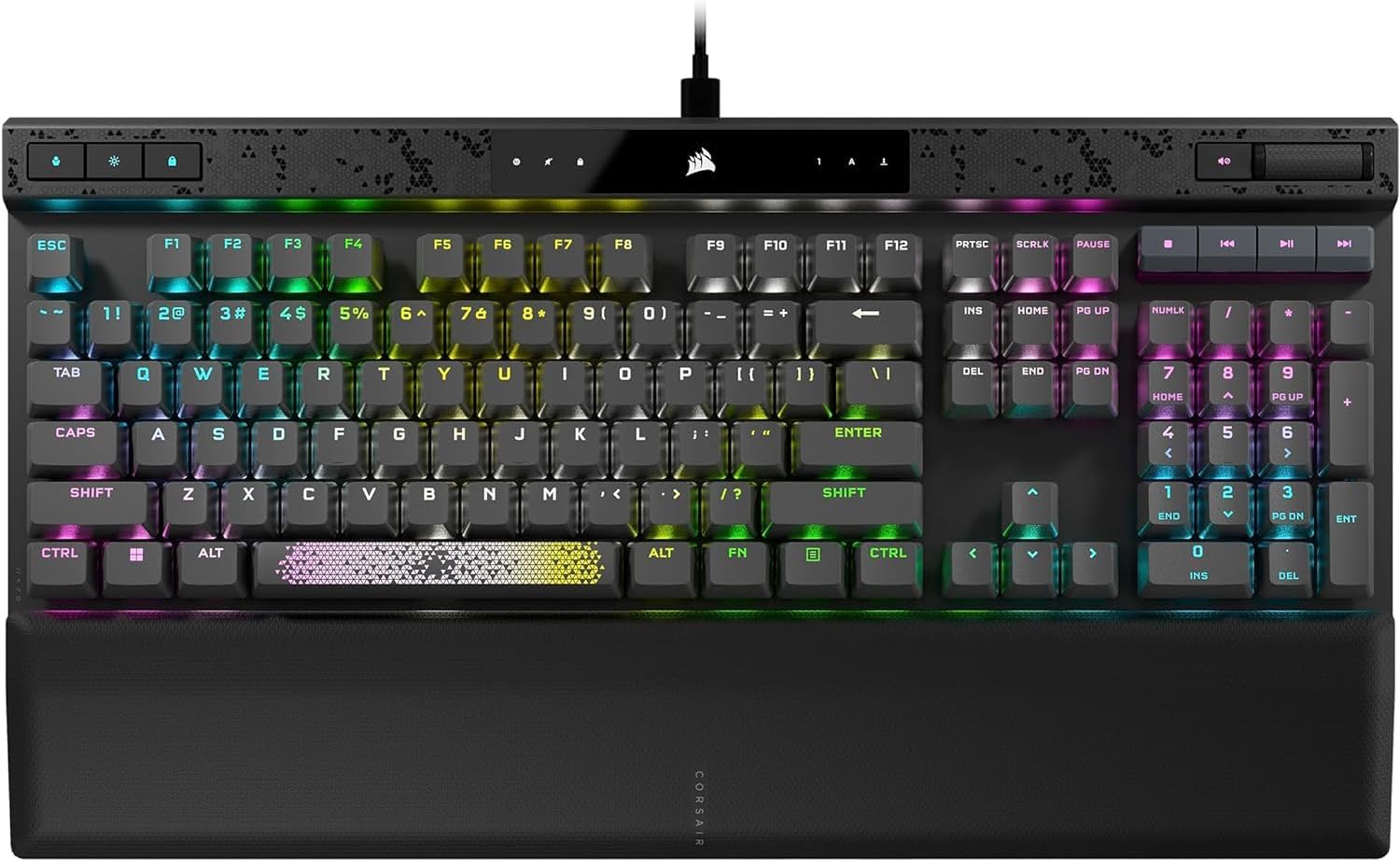
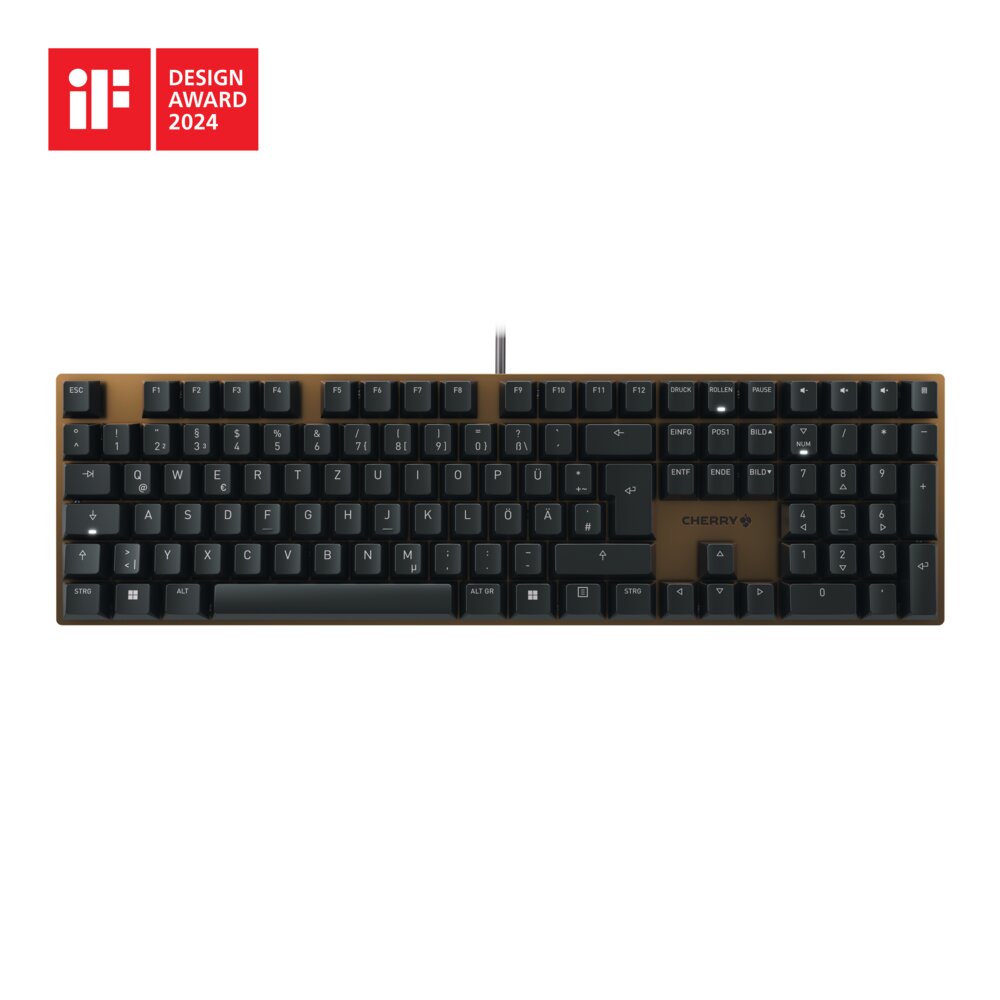
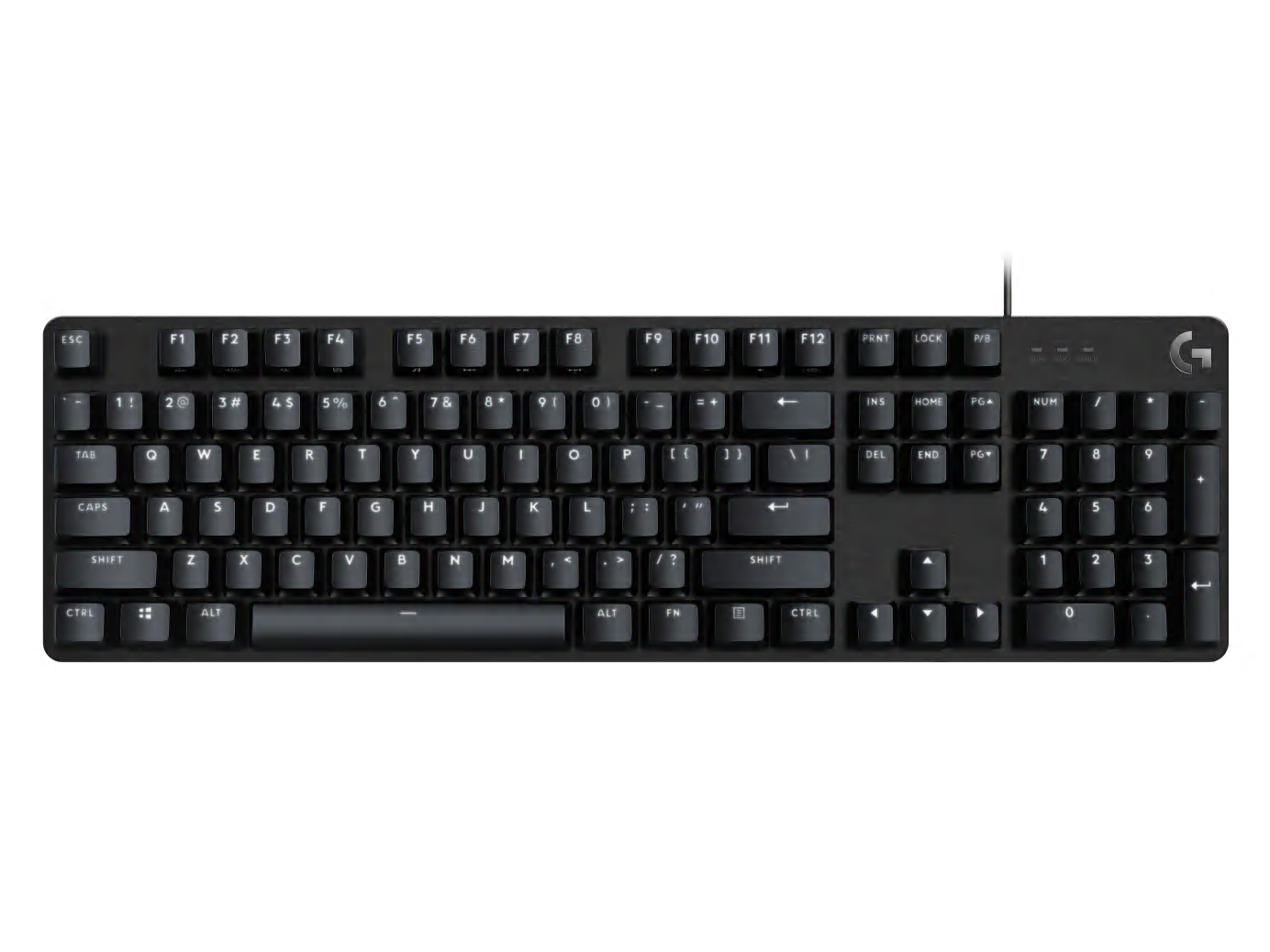
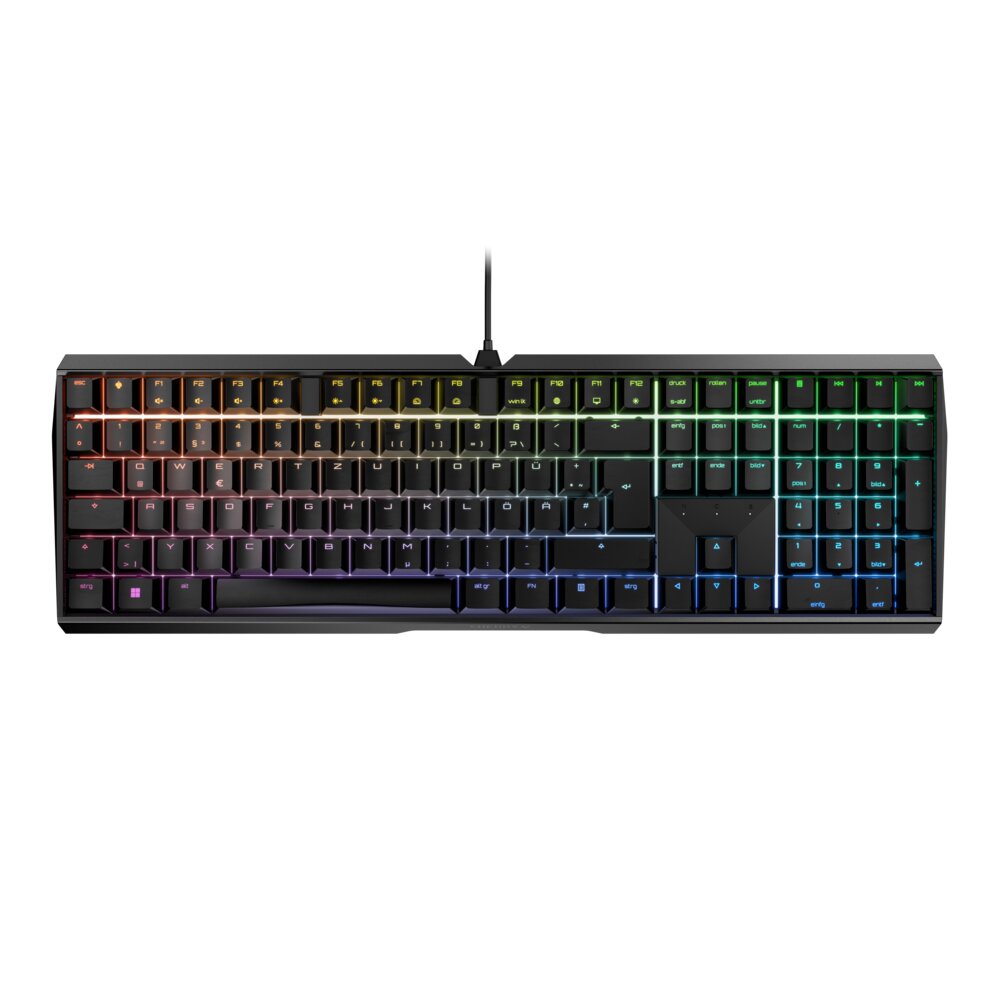
Typical key count: 104
Full-size layout
The full-size layout has a function row, navigation block and numpad in about 104 keys. Best for data entry, spreadsheets and anyone who wants every key.
A full-size keyboard, also called 100% or 104-key, includes everything: the main alphanumeric block, the function row, the six-key navigation cluster above the arrows, the arrow keys and a 17-key numpad. ANSI boards have 104 keys, and ISO boards have 105. Variants with extra media keys or a knob may reach 108 or more.
It suits anyone who works with numbers, such as accountants, analysts and data-entry staff, as well as people who like dedicated media and navigation keys. Games that bind to numpad keys, and simulation titles with many controls, also benefit.
The cost is width. A full-size board runs about 17 to 18 inches across, which pushes the mouse far to the right and can cause shoulder strain over long sessions. Small desks feel crowded, and the board is a poor fit for travel.
Keycap compatibility is the easiest of any layout. Nearly every keycap set includes a full-size base kit, and the numpad is covered by standard novelty or numpad kits. Check whether the set has the 2U numpad plus and Enter keys you need.
If you rarely use the numpad, a TKL or 75% board gives most of the function in less space.
Pros
- Every key available with no layers
- Dedicated numpad for data entry
- Widest keycap and kit support
- Most prebuilt options to choose from
Cons
- Widest layout, which pushes the mouse away
- Heavy and awkward to carry
- Needs a large desk
Questions