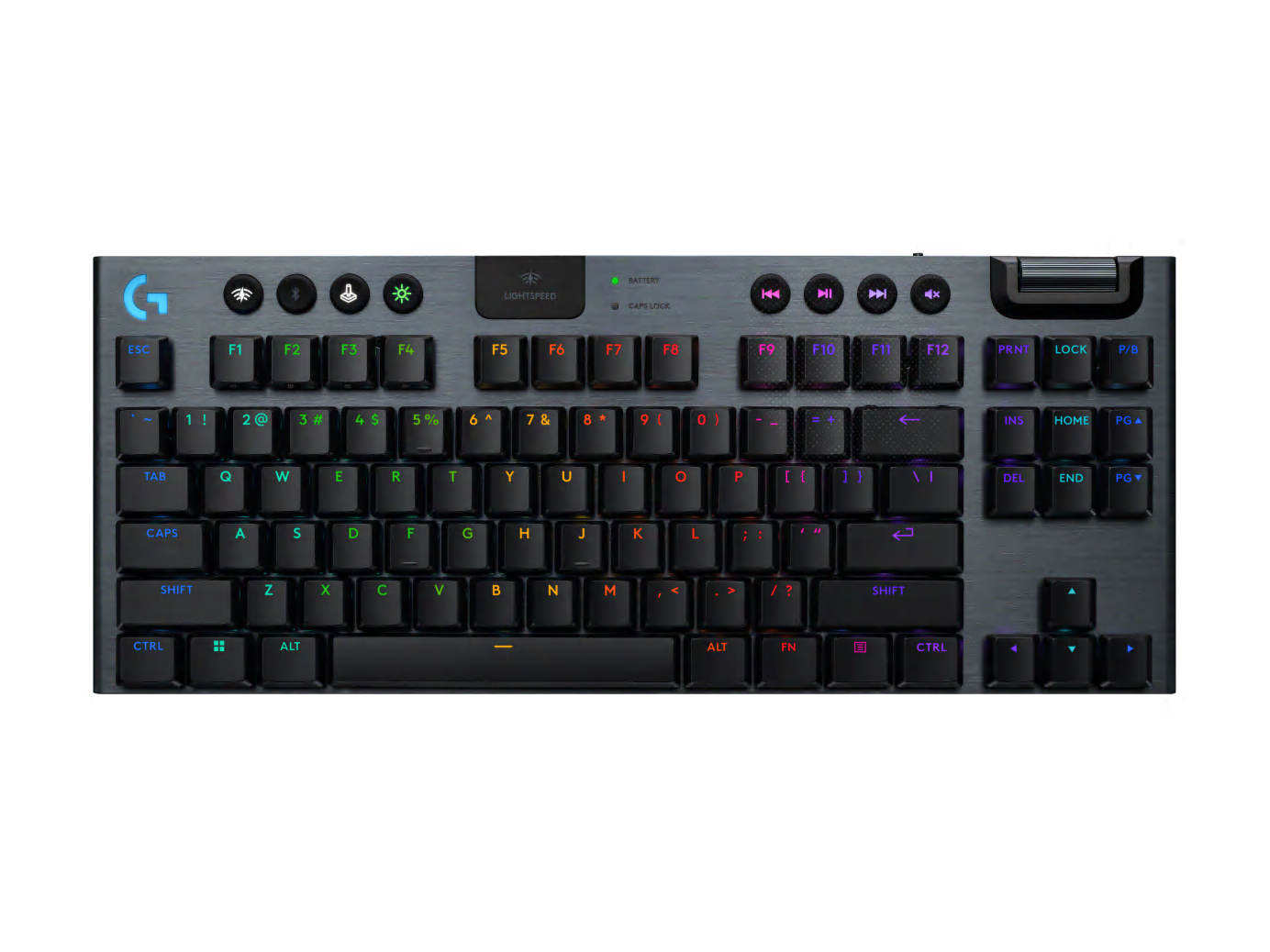
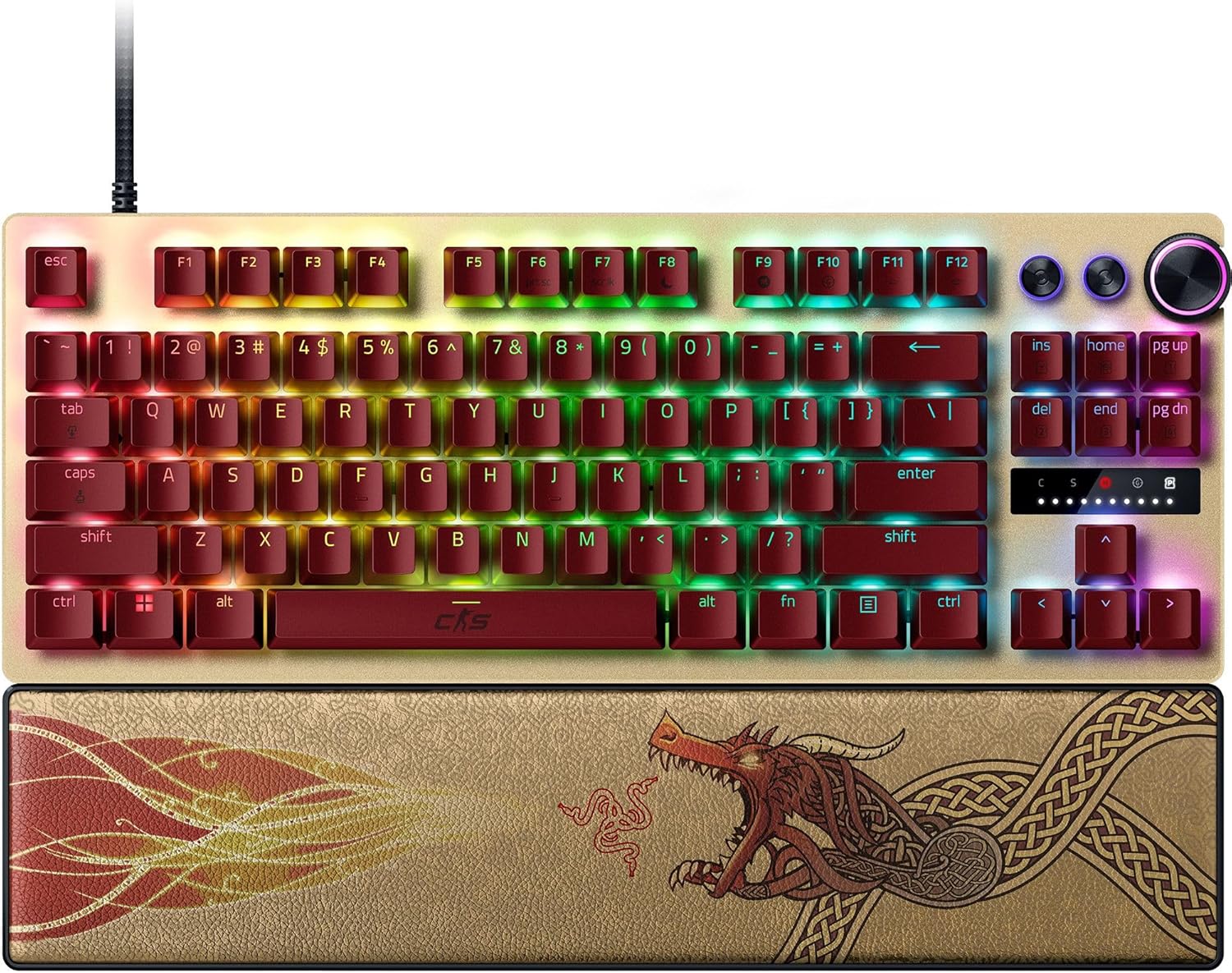
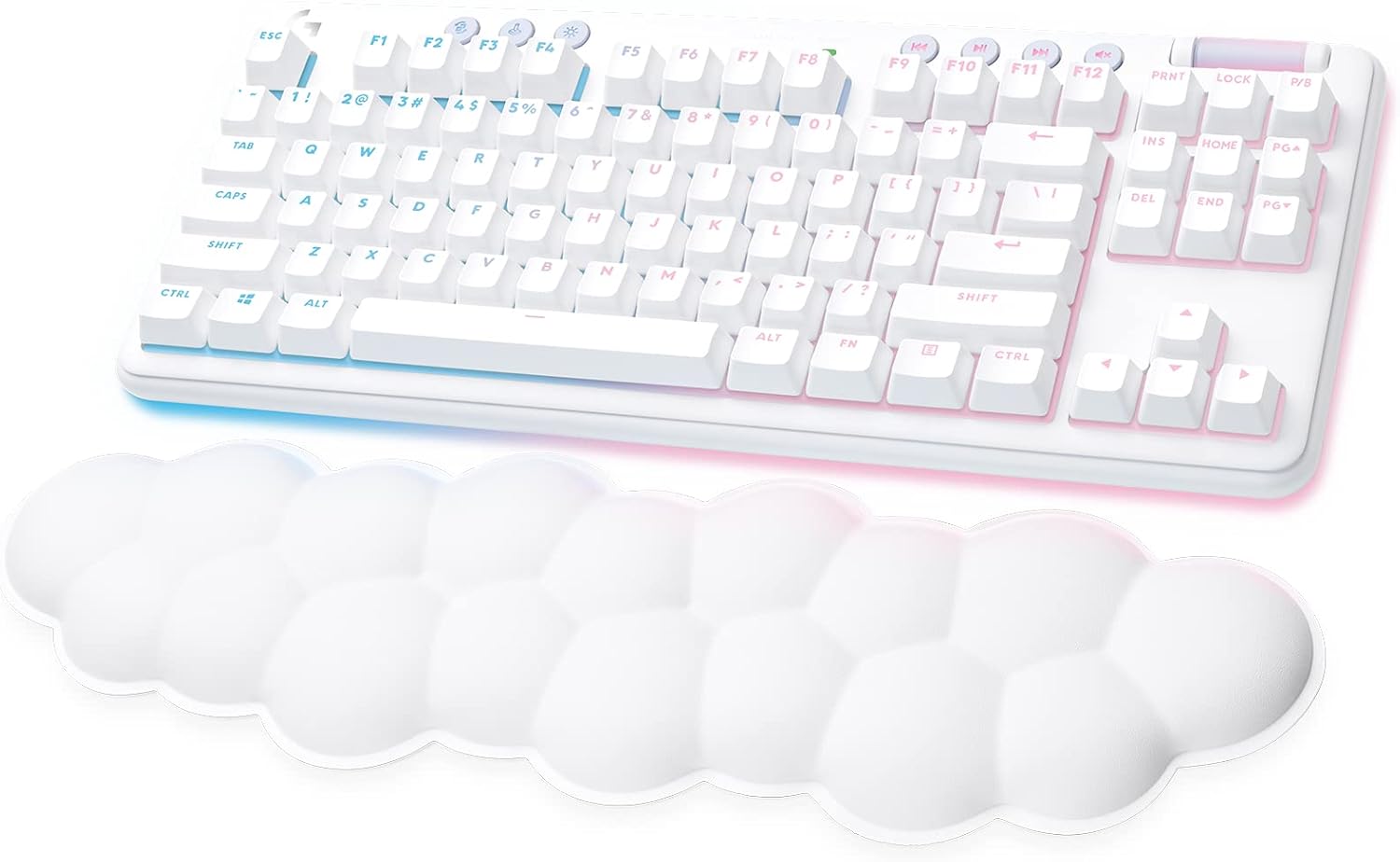
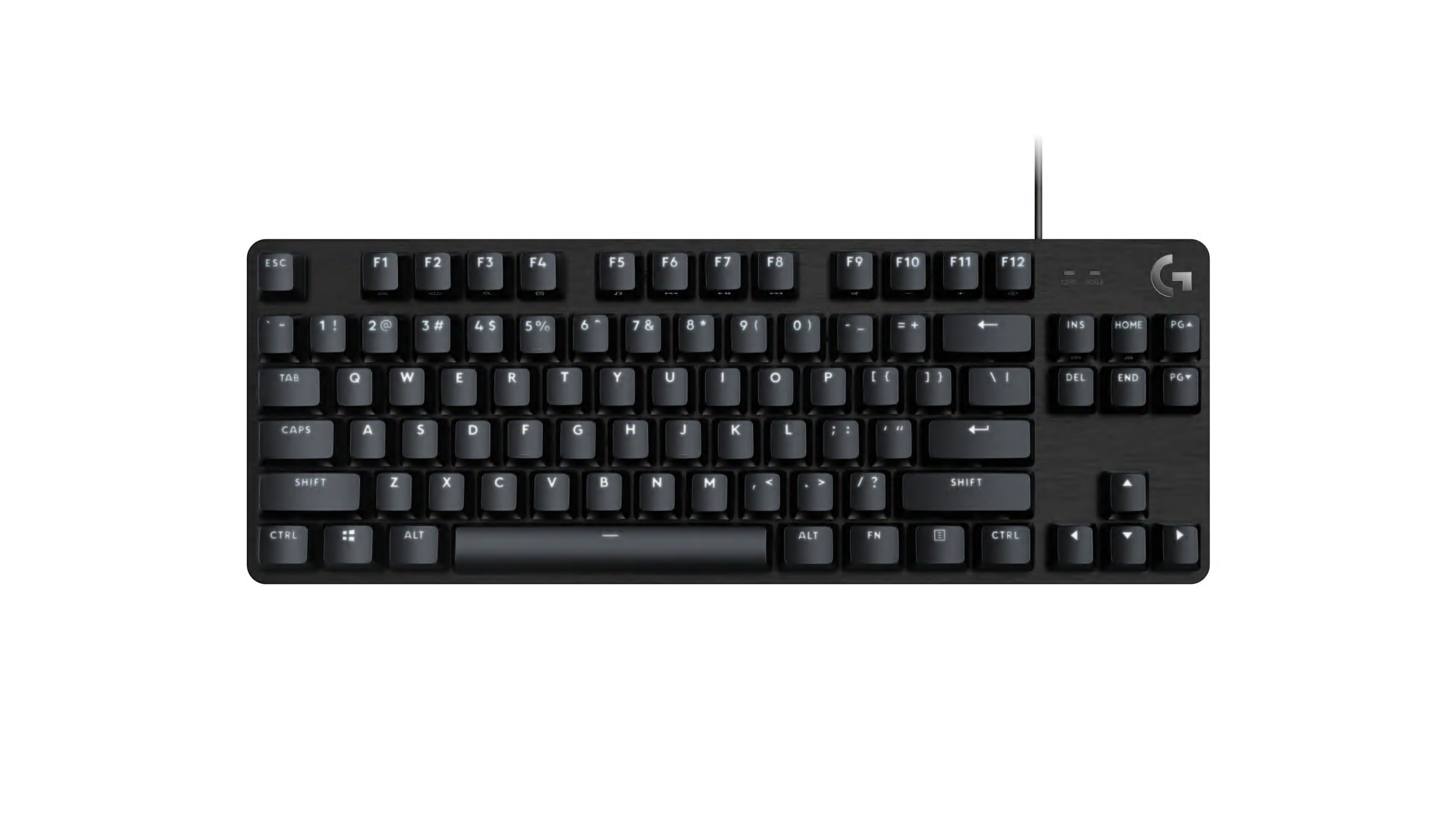
Typical key count: 87
TKL layout
TKL, short for tenkeyless, drops the numpad but keeps the function row and navigation keys. About 87 keys and a comfortable choice for most desks.
A tenkeyless board removes the numpad from a full-size layout. It keeps the main block, the function row, the six-key navigation cluster and the arrow keys. ANSI versions have 87 keys, ISO versions 88.
It suits gamers who want the mouse closer, writers, developers and anyone who uses the numpad rarely. You keep familiar shortcut keys such as Home, End, Page Up and Page Down.
The width is about 14 inches, which saves roughly 4 inches compared with a full-size board. It still needs desk depth and does not fit very small bags, but it is easy to move around.
The tradeoff is a lack of a numpad. If you need to enter numbers often, an external numpad is an easy fix. Keycaps are well supported: almost every set includes a TKL base kit, and most layouts use standard bottom row sizes.
Pros
- Keeps function row and navigation block
- Saves about 4 inches of width
- Wide choice of boards and keycap sets
Cons
- No numpad
- Still too large for travel
- Less compact than 75%
Questions